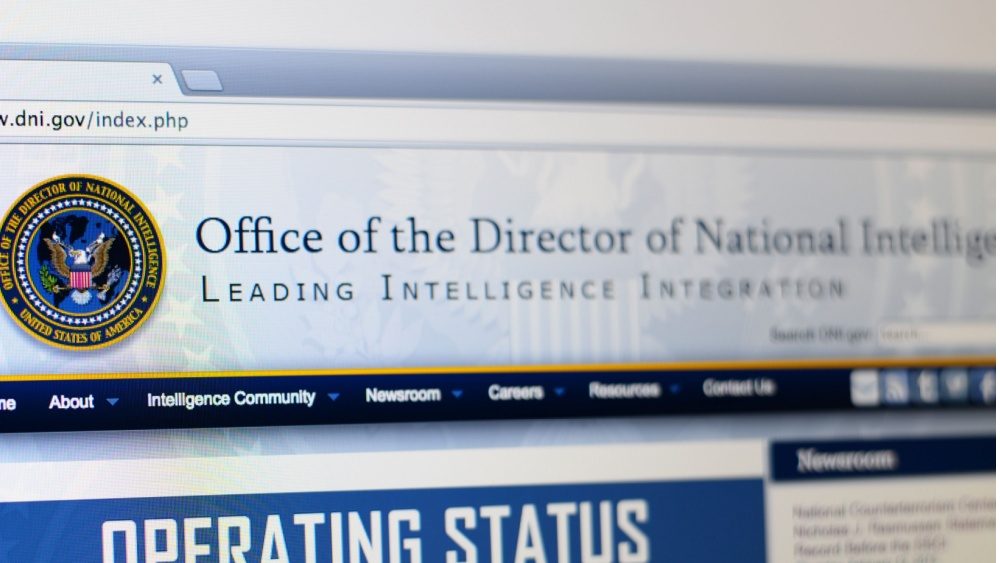
President Trump has nominated Jay Clayton, current U.S. attorney for the Southern District of New York and former chairman of the Securities and Exchange Commission, to serve as director of national intelligence, selecting a longtime legal and regulatory official to lead the nation’s intelligence community. The vacancy followed the departure of Tulsi Gabbard, who stepped down last month to care for her husband during his cancer treatment.
The decision comes as the administration faces intense legislative pressure to install a permanent leader for the nation’s 18 intelligence agencies. Trump praised Clayton in announcing the nomination, writing on Truth Social: “I am pleased to announce the Nomination of very Highly Respected Jay Clayton, former Chairman of the Securities and Exchange Commission, the former Head of Sullivan & Cromwell, one of the most prominent and successful Law Firms anywhere in the World, and the current United States Attorney for the Southern District of New York, to be the next Director of National Intelligence and, importantly, to serve in my Cabinet. Few people anywhere in the Legal Community are respected at the level of Jay. I encourage the United States Senate to confirm Jay as soon as possible.”
Clayton currently oversees one of the nation’s most prominent federal prosecutor’s offices and previously led the SEC during Trump’s first administration. Before entering government service, he was a senior attorney at the law firm Sullivan & Cromwell. If confirmed, Clayton would oversee the Office of the Director of National Intelligence, which coordinates the work of 18 U.S. intelligence agencies and serves as the president’s chief intelligence adviser.
The nomination follows mounting criticism of Trump’s recent decision to install Federal Housing Finance Agency Director Bill Pulte as acting director of national intelligence after the departure of former DNI Tulsi Gabbard. Pulte’s lack of intelligence or national security experience drew bipartisan concern on Capitol Hill and became a flashpoint in negotiations over the renewal of Section 702 of the Foreign Intelligence Surveillance Act, a key surveillance authority scheduled to expire.
Hours before Trump announced Clayton’s nomination, the House rejected a temporary extension of the surveillance program after Democrats linked their opposition to concerns surrounding Pulte’s appointment. Lawmakers from both parties had pressed the White House to nominate a permanent candidate for the intelligence post, arguing that stability was needed at the top of the intelligence apparatus during a period of heightened international tensions and national security challenges.
Clayton’s nomination now heads to the Senate, where lawmakers are expected to scrutinize his qualifications and vision for the intelligence community.
Editorial credit: Gil C / Shutterstock.com
About the Author